
Types of Data Fun88 Collects and User Information Protection Commitment
Every time you register an account or conduct financial transactions, you entrust a certain amount of personal information to the platform. Fun88's privacy policy clearly defines the scope of data collected, storage purposes, protection mechanisms, and member rights in each specific situation. This document applies simultaneously to internal staff, agents, partners, and end users — creating a unified legal framework that can be consulted and cross-referenced at any time.
Imagine this: you've just completed a withdrawal request and immediately receive a confirmation email containing your full bank account details. Convenient — but it also raises the question: who is storing that data, how, and for how long? This is precisely the scope that Fun88's privacy policy must answer clearly.
What Data Is Collected and From What Sources
Not every action on the platform results in information being recorded at the same level. The actual scope of data depends on each specific user interaction step.
Identification Data When Creating an Account
During the registration phase, the system records basic fields including full name, phone number, and email address. This is the minimum identification information needed to verify member identity — and also the basis for contact if account issues occur. If any point during the Registration process requires additional verification documents, support staff will contact you through this information channel.
Financial Data From Deposits and Withdrawals
Each financial transaction leaves its own data trail: bank account number, beneficiary name, and transaction history are all stored. The practical purpose of this storage is to reconcile disputes or refund requests, while also supporting the KYC verification process that any online financial platform must perform. If you want to learn more about the Withdrawal process and identity verification, the related guidance page may be helpful.
Technical Data and Usage Behavior
Beyond direct personal information, the platform also collects IP addresses and device data each time a user logs in or participates in games. This type of data serves two parallel purposes: detecting anomalies in login sessions (such as sudden IP address changes mid-session) and personalizing experience based on actual usage behavior. This is technical data with no direct personal identification value, but when combined with identification information, it becomes part of a more complete member profile.
Data Protection Mechanisms and Storage Standards
Data collection only has value when accompanied by sufficiently strong protection infrastructure. The platform implements TLS/SSL connection encryption at 128-bit to 256-bit levels — this is the standard encryption range in the financial and online banking industry, sufficient to resist common man-in-the-middle attacks. Combined with IOVATION network security infrastructure, every transaction session is checked for device and behavior in real time.
Personal information is stored according to international standards, meaning data is not retained indefinitely but follows the purpose principle — stored only when necessary for operational activities or legal obligations. This distinguishes a responsible storage policy from arbitrary data accumulation.
One notable point: Fun88 operates under licenses from PAGCOR (Philippines) and Isle of Man GSC — two regulatory bodies with strict requirements for user data protection. This means the privacy policy is not just an internal commitment but must also meet oversight criteria from external authorities. To better understand the technical security aspects, you can refer to the dedicated Security policy page.
Complaint Processing and Personal Data Requests
This is the part often overlooked in privacy policies, but it's the most practical part for users when issues arise. When do you need to file a complaint? For example: a member notices that information in their account profile doesn't match the data provided during registration, or discovers unusual transaction history items that haven't been explained.
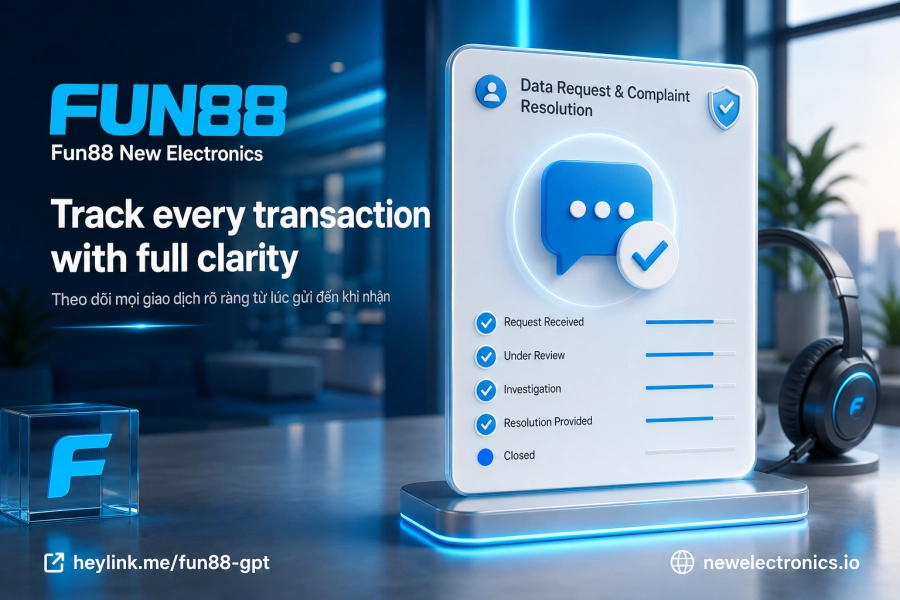
Steps for Processing Data Adjustment Requests
When a request arises to edit or delete personal information, users need to contact directly through the platform's official support channel. The typical process proceeds in the following order:
- Submit a request with identity verification information (full name, registered email, account number).
- The processing department cross-checks the request against the original record in the system.
- If the request is valid, the change is applied and the member receives a confirmation notification.
- In cases where the request involves financial data (account number, beneficiary name), additional verification documents from the bank may be required.
The important point is that data deletion requests are not always executed immediately: if that data is serving a legal obligation (for example, supporting an investigation), the platform may postpone deletion until the obligation is resolved. This is a common clause in most legally compliant privacy policies — not an exception unique to Fun88.
Handling When Fraud or Violations Are Detected
In cases where the system detects signs of fraud — such as using software to interfere with games or manipulate results — the behavioral data of that account will be recorded and added to a blacklist. The direct consequence is rejection of any transaction or withdrawal requests from the violating account. This data is not deleted upon normal request, as it serves the purpose of protecting a fair betting environment for all remaining members.
The table below summarizes common privacy-related situations and corresponding handling:
| Situation | Member Request | Processing Result |
|---|---|---|
| Profile Information Discrepancy | Edit name, phone, email | Processed after identity verification |
| Request to Delete Financial Data | Delete old bank account number | Executed if no legal obligation remains |
| Unusual Transaction Detected | Reconcile transaction history | Processing department cross-checks original record |
| Account Flagged for Violation | Appeal blacklist placement | Reviewed under internal investigation procedure |
Scope of Application and Responsibilities of Related Parties

The privacy policy binds not only end users. The scope of application extends to internal platform staff, agents and affiliated partners, as well as authorities when required by law. This means: if an agent mishandles member information, legal responsibility still falls within the framework of the platform's general policy.
For cases where authorities request user data — such as in investigations related to money laundering or financial fraud — the platform has a legal obligation to comply. This is a standard clause in any licensed online financial system, and users should understand this as part of the legal framework, not a privacy violation. The terms of use on the Terms page and Disclaimer page may provide additional legal perspective on this issue.
Member Rights Within the Policy Framework
Beyond knowing what data is collected, members also have active rights in certain specific situations: requesting access to review stored information, requesting updates when information changes (for example, changing phone number after switching carriers), or raising concerns when you notice data being used outside the agreed scope. The login and account management channel on the Login page is also the starting point for users to check their personal profile status at any time.
A platform operating since 2008 and still maintaining licenses from two independent regulatory bodies — is that a sufficient signal for users to self-assess the level of compliance in practice?